
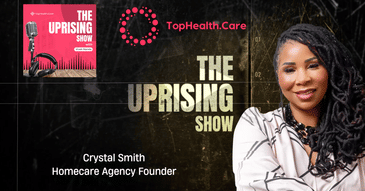
In this episode of The Uprising Show, we welcome Crystal Smith, entrepreneur, business consultant, author, and business broker, to share her insights on building, scaling, and exiting businesses, especially in the care industry. From her roots as a single mother and caregiver to becoming a mentor and advocate for ambitious founders, particularly women and first-generation entrepreneurs, Crystal Smith highlights the critical value of mentorship, the hidden costs of going it alone, and the legacy-building opportunities in turning businesses into valuable, sellable assets. Tune in as we explore why soft skills from caregiving translate into elite business leadership, the shifting landscape for small healthcare operators, and the empowering mindset of becoming “the industry” in your own right. If you’re looking to gain confidence, build systems, and create generational wealth, this conversation is for you.
Timestamps:
00:00 Crystal's journey to entrepreneurship
05:11 Helping CEOs Value Their Business
07:32 Helping sellers find buyers
12:03 Finding the right mentor
13:32 Importance of seeking guidance
18:06 Skills gained as a caregiver
20:29 Empowering women in the industry
23:02 Embracing broader mentorship opportunities
29:05 Importance of Showing Up
31:44 Ending the interview with gratitude
Insights and Inspiration from Crystal Smith, the host of Care to CEO Podcast
The world of entrepreneurship, especially within the home care and healthcare industry, is filled with unique challenges and extraordinary opportunities. In a recent episode, Crystal Smith and Vivek deliver an engaging conversation packed with valuable insights for ambitious founders, caregivers, and first-generation business owners. Here, we explore key themes and actionable takeaways from their discussion to help you build a valuable, sustainable, and empowering business.
The Real Cost of Going It Alone in Business
Right from the start, Crystal stresses the importance of seeking guidance early in the entrepreneurial journey. Waiting too long to find a mentor or coach can be a costly mistake, not just in terms of money, but most critically, in lost time. She confides that the “biggest cost to trying to go with this alone is the lost time” and highlights that you cannot reclaim time once it is gone. Her personal experience reveals that having the right help and guidance could have prevented both financial losses and wasted effort.
Empowering First-Generation Entrepreneurs and Underdogs
Throughout the episode, Crystal Smith proudly states her commitment to serving ambitious founders, caregivers, mostly women, and first-generation entrepreneurs. These are the individuals who might have been considered underdogs but have worked exceptionally hard to get to where they are. She reflects on her journey from being a caregiver to becoming a founder, consultant, author, and business broker. Her background gives her a unique ability to connect with those who need strategy, systems, and most importantly, confidence.
Building a Business That’s Worth Buying or Selling
A significant shift in focus for Crystal is moving from simply helping people launch businesses to guiding them toward building companies that are valuable and sellable assets. The goal goes beyond ownership; it is about creating a lasting legacy and real generational wealth. Many owners do not realize the true value of what they have built, and Crystal Smith is dedicated to helping entrepreneurs recognize and maximize the worth of their businesses, especially in industries where buyers are increasingly looking for turnkey opportunities.
Navigating Regulatory Challenges and Leveraging Soft Skills
Both Crystal and Vivek address rapidly changing regulations in the healthcare space. Compliance and staffing are only becoming more challenging, while profit margins fluctuate and the documentation process can be overwhelming. However, there is an upside: access to information and technology, including artificial intelligence, is making some aspects easier. Crystal advises entrepreneurs to work with mentors or communities who genuinely care and are willing to challenge you, not just motivate.
Additionally, she highlights that the soft skills developed as a caregiver, such as problem-solving, crisis management, and leadership, are elite business skills that compound over time. These skills are transferable to entrepreneurship and form a solid foundation for success.
The Power of Mindset and Showing Up
One of the most empowering messages from the episode is Crystal Smith’s call to “show up for yourself.” She acknowledges the daily struggles that business owners face and admits that not every day is perfect. However, what matters most is consistently showing up, even if you aren’t at your best. This persistent mindset fuels long-term growth. As Crystal states, building yourself up is essential for building a successful business, helping others, and inspiring those connected to you.
Building a Legacy and Creating Freedom
The episode concludes with a powerful reminder that the real objective in entrepreneurship is to build something valuable and sustainable that delivers genuine freedom to you, your family, or someone watching your journey. You are always being watched, whether by peers, potential protégés, or future generations, so strive to be your best.
If you seek more inspiration or want to connect with Crystal Smith for business guidance, you can book a discovery call at sellwithcsmith.com and catch more insightful episodes at caretoceo.com.
The Uprising Show Website: https://theuprisingshow.com/
Vivek Nanda's LinkedIn: https://www.linkedin.com/in/viveknanda1/
Vivek Nanda's Twitter: https://x.com/vickks
TopHealth Media Website: https://tophealth.care/
“Disclaimer: Informational only. Not medical advice. Consult your doctor for guidance.”
[00:00:00] The biggest cost to trying to go with this alone is the lost time of trying to figure it out. I wish I had someone much sooner than I did. The cost is so high because the cost is not just time, but there's money attached to it too. You actually can lose money from what you didn't know when you could have just got the help, the guidance that you needed. You can't get time back.
[00:00:38] Welcome back, everyone. And today's episode, we are going to have, I think, much different conversation with Crystal than we have had in the previous episodes. Absolutely. So Crystal, I guess for our listeners who are first time listeners to the shows, who are you? What do you do? Very brief introduction.
[00:00:59] Yes. So for those of you who don't know me, I'm Crystal Smith. I'm a founder, a business consultant and author, and now a business broker. And I help, essentially, I help entrepreneurs build businesses, grow, scale. And now I help them exit when they are ready to exit and learn the value of the business that they have taken years to build.
[00:01:27] So that is who I am in a nutshell. I am someone who started as a caregiver, especially in my 20s when I was a single mother. And I worked as a CNA. So I learned about the care industry from the inside. And eventually, I started to build my own empire and now I help others do the same thing.
[00:01:50] And even though I'm shifting a little bit into something a little different, I still say that I serve entrepreneurs in a nutshell. That's still what I do.
[00:02:03] Yeah. And I think the most fascinating thing is, it's like, you'll find on internet, a lot of people just giving advice and have no background, no experience. And this is the special thing that you have done that. You've done that. You started as a caregiver. And you built this whole thing. And you're at that stage where not only building it, you have now obviously mentored and helped several other people also.
[00:02:31] So I'm excited to want to get an addition to your business. I think that's like completing the circle. Like, you know, get them started. Absolutely. And it's so great. Just because, Justin, remembering our first conversation, I mean, now you are, you produce my show and I've grown so much since we first met.
[00:02:55] And it's been really a blessing. So this is exciting for me to be on with the founder or CEO of TopHealth Media. Yeah. Yeah. For the Top Health family. Yeah, exactly. I mean, the same way, right? So let's talk about also your show, right? Like, so you have care to see.
[00:03:19] And let's see, who is the person you are built to serve that? Like, who are these people that you're trying to get to? I think ambitious founders, especially caregivers. Mostly women do reach out to me, first generation entrepreneurs, you know, people who were probably considered the underdogs. They're trying to help, you know, people who are trying to get to help.
[00:03:41] And, you know, they've really had to work to get somewhere. Those are the people who really reach out to me and that I find that I really enjoy helping. And that I help them gain success. Also people who need strategy and systems as well. And confidence. Yeah. People, a lot of people who just need confidence. They just, it's not like they can't do it. They just, they just need some handholding, some guidance. They need someone to remind them that they can do it.
[00:04:11] See themselves doing it. And I think people see themselves in me a lot, especially someone who was a single mother, someone who was a, you know, struggling at some point in time and was able to get somewhere. You know, I think I help remind people that you could absolutely do it. And, and, and we get a lot of inquiries from you and some time to time we pass you and comes through the podcast where people are still asking, is she still mentoring, teaching? I was like, yes.
[00:04:41] Yes. Yes. Yes. That's a good sign that people are, you know, this is across the country. So that's also good. So, yeah, I guess what's happening in your world right now. So from where you sit, how is, I guess, what are the changes that you are seeing as, you know, or I guess let's first start with what are you building or rethinking this quarter? Are there things that are changing on your end? Let's talk about those things.
[00:05:11] Okay. So I'm really focused on helping other business owners understand the value of their business. Because as a founder and someone who really had to learn while working in this industry, that wasn't something that I initially really understood was important.
[00:05:29] But now that I do, I really want to help people understand what they have, because I think that a lot of us, especially the care to CEOs, such as myself, we were just, we were working, we were, we were working and operating a business.
[00:05:46] And we built something. And to us, I don't think we realize what we have. And I really want to help people understand what they have and what options they have. You know, because I don't think that a lot of people know that. Yeah. And anything you are specifically like re-strategizing on the existing business side, what's one thing that I guess you are excited about that, you know, that did not exist for you when you started, but now it exists.
[00:06:15] And that's, I'm also going back to the first we connected for something that you connected. Absolutely. Yes. So I think I'm more in a position where I'm helping people or I'm moving from helping people just start their business from, I'm, I'm, I'm moving from helping people start to helping people build businesses that are worth buying or worth selling.
[00:06:42] Because I think that's important. That's, that to me is where the real legacy and generational wealth comes into play. You know, especially for those first time generation business owners. When you're speaking to these people, are they like almost surprised or are they coming from this? Yes, that's obvious. That's what we should be doing. I actually have more people that are coming to me. They are all, they're ready to buy.
[00:07:12] The buyers are ready. They already have SBA funding. They already have an investor. They have everything they need. They, what they know is they want to buy a business in the healthcare industry. Many of them, not all of them. And they don't want to go through licensing process. They're like, I'm, I'm skipping that. And so they're ready to buy. They want something turnkey. And so many of us, I know so many people that I'm connected to personally,
[00:07:40] they have that. They already have that. And they've been doing it just long enough, you know, where they want to walk away. I'm about to be a grandparent. You know, I would like to enjoy my grandchild and, and I still have young children, you know? So I think there, there's a lot of people who have that same mindset or just, you know, maybe you just want to start traveling. Many different reasons, but the buyers are there.
[00:08:05] The sellers are there. And I just want to help create that bridge for people. Yeah. And I, and we were talking about it, uh, off the record that when I was in home care, that's the strategy we used in Pennsylvania that, uh, whenever we try to get it, we definitely look for some sort of a dormant instance and get that to then reactivate it, buy it, reactivate it, run the operation.
[00:08:33] And that's what we did with the first three locations, uh, in different counties. And that was pretty like, that's the way to go. I would say. Wow. Yes, absolutely. Absolutely. Yeah. So I think, um, what's really exciting about this industry is how fast it can accelerate wealth for both a buyer or a seller. Uh, so, you know, I think it versus starting from scratch.
[00:09:03] But so many of us started from scratch. And so we built something and it's worth something. Yeah. Yeah. And, um, I mean, uh, you know, there's a lot of changes happening just across the board. So where you sit right now, based on what you're looking at, how is, I guess, healthcare world changing from small operators for, for small operators right now?
[00:09:30] Um, I think that the operators who will be able to survive this, uh, they won't be necessarily, uh, as previously, uh, the, the best caregivers. Uh, you know, many of us were, we were good at taking care of people. We're, we're good at that aspect of it. Uh, the new, the new, uh, home care owners need to be great leaders. Uh, they need to be system builders,
[00:09:56] recruiters, and they need to create a new culture. And they also need to go into this with the mindset of building something that's worth selling or, or worth passing down, you know? So I think those are the people who, who survived this. And, um, you know, I guess we talked about a little bit on the
[00:10:20] freeze off new licenses. That's always a challenge. So what else, I guess, what's getting harder? What's getting easier? Is there things that made easier? Anything? Oh, goodness. Uh, the compliance is definitely going to be something that is going to be harder. Not that it wasn't already, but you know, there are definitely going to be some changes. Um, I think it's going to be more difficult to staff. It already is, but I think it's going to be
[00:10:49] even more difficult. Um, I think that the profit margins are going to, uh, change drastically, drastically and the documentation process, which is already a huge part of operations is the documentation process. But, um, I think that what's going to be a little easier, you know,
[00:11:11] as access to, uh, access to information. I think they are, uh, understanding that many of us didn't have easy access. That's why we had mentors. That's why we relied on other agency owners to, you know, help give us, you know, the, the blueprint. Um, and I think that technology is going to make things easier. And of course, AI and, and as I say, always make sure you have a mentor, a mentor of some
[00:11:40] sort, or, or be a part of a mentorship community. Yeah. And, uh, you know, on regulation and compliance, right? Like, uh, if based on what, of course, yeah, as the things are getting difficult and we are looking at compliance side, is there anything special you are advising to the people you are coaching?
[00:12:03] Definitely work with someone who is, has experience, uh, for sure. Who's, uh, you know, experienced many of the pitfalls that you definitely want to avoid. You want to, you know, uh, someone who, who cares because there are a lot of mentors out there that just want to take your money and, you know, and leave you hanging. Um, yeah, I think that get someone who's accountable and will help you
[00:12:32] be accountable. Uh, people who are going to, or, or a community that helps you strategize and, and they're truthful and honest with you and that they, and they challenge your thinking. You know, they, they don't, they're just not someone saying yes to you all the time. If, if they think that you're doing something wrong or could do something better, they're not afraid to tell you because this is not just about motivation. You know, this isn't mentorship is not about someone trying to motivate
[00:12:58] you. If you want that, you know, go on YouTube and find something to listen to. Yeah. Yeah. Uh, you know, I mean what, I guess, uh, you know, you, you've been doing coaching and mentorship for a while now. Why is, why is it like actually essential, especially in your industry? Because sometimes I feel like people are just like, you know, I have no, I don't need it. YouTube is enough. Right.
[00:13:25] Oh, right. Right. Yes. I think people in information and coaching. Absolutely. I think that the biggest cost to trying to go with this alone and not just this industry, but any, any industry, especially if you're going into business is the lost time of trying to figure it out. I, I wish I had someone much sooner, uh, than I did. I, it would have cost it. The cost is
[00:13:53] so high because the cost is, is not just time, but there's money, you know, uh, attached to it too. You actually can lose money from what you didn't know, you know, when you could have just got the help, you know, the guidance that you needed and you can't get time back. Yeah. Yeah. And, uh, has there been like, uh, you know, of course, from your experience, is there an example where you
[00:14:19] were on for yourself instead of relying on the mentorship you were trying to do by yourself? Oh my goodness. A price for that. Oh my God. The year, the year I started, I said to myself, I don't want anybody. I'm a one woman show. You know, I thought I could do, I mean, I had my husband, you know, in my, in my children, but outside of that, I said, you know, I'm going to try to learn and do everything that I could on my own. So
[00:14:47] I was a payroll department. I transported. I mean, I did all these things and I wore myself out. So, I mean, I was so burned out. So yeah, I don't recommend that if I could go back, there's no way like the way I can delegate now. It's, it's crazy. Now people are like, I mean, I think you can handle that. I'm like, no, no, someone else can.
[00:15:15] Yeah. Yeah. Um, you know, most people don't know when to get help, right. And that's kind of, it's very difficult for people, especially when you are being a solopreneur and starting things out. Uh, would you say like, in your mind, would there be a number like in terms of, Oh, when you get to like $20,000 a month, then that's the time. It's probably to get it. Oh my gosh. Well under that.
[00:15:42] Yeah. No, uh, honestly five at five, you, you should really, if you have $5,000 a month, you're making regularly. Yeah. Um, I would start at least preparing myself to, to aligning with help, whatever that means, you know, with different, uh, professionals for sure. Yeah.
[00:16:07] Because if, if business is going good, then it's just going to increase and you should just prepare yourself in advance. Yeah. There's no way. I don't know what I was thinking. When I look back, I don't know what, I don't know what I was thinking, but now I have a team. Thank God. Yeah. No, that's good. That's good advice. Because I think, uh, most people think that, Oh, you got to get to like, I don't know, million or something. And some people think,
[00:16:32] no, I don't think you should. No, no. Because by then it's too late. If you don't have what you need, you, you are, you stand to lose if you don't have some help, some systems in place. So no, I don't recommend it. And there's so much good help out there. And I feel like when you try to do everything, then it's not being done accurately. You know, when I was trying to do everything, it wasn't being done right. When I was doing billing myself,
[00:17:03] um, the, the mistakes I kept making and not because I didn't know how to do it, but sometimes I was so overwhelmed that I could input the wrong number. I could input the wrong spelling of a name. And now my bill, my billing has been set back three weeks, you know, just from an error. So I said, no, then that means I shouldn't be doing this. If I'm making errors consistently, yeah, I'm not going to do it. And so I stopped doing my billing. Yeah. And initially you couldn't tell me,
[00:17:31] I actually did have people, uh, advise me, you know, don't do your billing. Let's, let someone else, you know, do it. And I said, no, that's, this is easy. It's so easy. Yeah. No. Yeah. After like the third mistake, I said, no. Yeah. Um, now, you know, and I've heard this, you have said this multiple times that
[00:17:56] the soft skills caregivers build are actually elite business skills. They are. Yeah. Can you break it down? What exactly you mean by that? So I think, um, from even in my twenties, I, and I didn't realize this, but as a caregiver, you develop executive skills, um, every day, you know, problem solving that, that, that alone, the, the problem solving is so crucial because you just, you're quick on your
[00:18:26] feet. Um, the crisis management, you know, again, it does go with the problem solving, but it's just being quick on your feet and not panicking, uh, remaining calm, jumping right into leadership, uh, you know, developing proper communication and, and build, building trust, uh, within whatever atmosphere you're working in, you know, it's just, it's crucial. And, um, again, I think these are a
[00:18:55] lot of first time, a first generation entrepreneurs and founders bring a lot of that resilience already because you just, you just don't have a choice. There was no wealthy uncle that handed anything down to you. You just had to figure this out. We had to be resourceful and we had to adapt. And these are not things, they don't go away. They, they don't go away that they're always with us,
[00:19:18] uh, because we started with them. So I, and I think that's why I really love, uh, usually the group of people that they reach out to me and that I work with because we always tend to always have that in common, no matter where they are from in the, in the world, you know? So I think it's just a blessing. Yeah. Yeah. Feels like, uh, you kind of said like soft kills kind of compounds and become
[00:19:44] more valuable. It absolutely does. It absolutely does. And then, and from that, you know, we build, our confidence comes and, and, uh, you know, it just, it, it betters and heightens our decision-making sales, you know? Yeah. Yeah. And, uh, you know, of course you as a woman in the industry and now,
[00:20:09] especially, you know, other women who are, uh, trying to reach out to you to get help, especially women of color and first generation owners, is there something in the industry that tries to like kind of underrates the women and not gets enough or equal way of progressing? I mean, I think we, we're, we're coming a long way. I think, um, you know, as just women in general
[00:20:35] in the workplace, um, I think that we are making our mark everywhere. Um, but that's why I've, I've adapted the saying I'm the industry, you know, because I'm, I'm the industry. So just wherever that means that I myself can do many different things and, and, and, and many different capacities. And I think that's really what I'm working to help build other women up to and other just people in
[00:21:05] general up to that. I'm the industry, I'm the business, you know, I'm the face. And so, um, um, I think that that's really helping me, uh, produce results for myself and others. Yeah, no, that's very powerful line. Is this something you came up with or somehow you got this, uh, idea to put it out?
[00:21:27] Um, I think I was, I was at a, um, oh, oh goodness. What do you call it? It was like a conference and someone in the conference say, I'm the business, you know, I am the business. And I thought, okay, well, I'm the industry, whatever that means. Because right now I'm, I'm, I'm in modeling,
[00:21:51] I'm, I'm in a, in brokering. So there's many different things I can do. What I, what I know for sure is I don't need to be invited to anybody's table. And I, I love to remind people of that. I think if that's the one thing that I do as a consultant is to remind people that you, you never need it to be invited to anything. You never need anyone's approval or validation.
[00:22:16] You're the industry, you're the business and you take it wherever you go. That, that kind of goes with that. Uh, my body is my temple sort of, because you take, you take your skills and your experience wherever you go and you don't need anyone to invite you or give you an approval of what you know you can do. Yeah. I think this is empowering at a next level because a lot of time,
[00:22:45] sometimes even when you say I'm the business, we are still boxing ourselves in that. In that. Yes. Right. And this is like, kind of like liberating, but also being like, do whatever you can, right? Like go and just mess it up. Absolutely. Because I was really staying focused on home care and health care. And it was many, uh, other mentors. And when I travel, you know, people come to me and they're like,
[00:23:13] yeah, but you don't, you don't just have to be in, you know, teach people in that space or work with people in that space. Um, people just relate to you. There are so many people who just relate to you and just, you know, want to hear your story and want to, you know, work with you based on that relatability. So, you know, I, I, I, it took some time, but it, it started to help me get out of my own box and get out of my own way because that's, that's what I say all the time. We, we have to get
[00:23:43] out of our own way. Yeah. And, and now you're teaching this to other people, which is. I am, but I remember the first day that we recorded the podcast. My, I can remember that first episode. I think, I think I wanted to have a panic attack right there. And I remember when I was talking to you initially prior to that, you know, just when, you know, we were setting things up and I said,
[00:24:10] I said, but you know, you, you work with doctors and you work with these really successful people. I was like, I, I don't see where I fit into this. And you were like, oh no, but you do, you do. And it turns out you were absolutely right because people come to me all the time. They don't, they don't care that I'm not a doctor. I don't present myself as a doctor in the first place, but they don't care. It's like, you still have experience that I want to learn. So that's all
[00:24:39] that matters at the end of the day. Yeah. And, and you believe it or not, a lot of doctors, uh, when they are looking at our platform and services, they point to your show. Oh my gosh. Your show, that was, uh, we saw, I was like, yeah, it was like, yeah, you know. Wow. That's exciting. So, yeah, yeah. So it's kind of, uh, it's a full circle moment, kind of like, uh, you know,
[00:25:05] where it started, but believe me or not, it's just like you said, right? Like everyone comes with their own superpower. So you have done an accomplishment and now you're teaching others. That's a bigger deal, right? It is. It's a big, it's a big deal. Well, you know, and that what's interesting is now people are coming to me about podcasting, you know, can you help me with my podcast? So, so I'll be coming to you, uh, you know, about, about those people and say, well, I'll, I'll take you to the person that I
[00:25:32] know. Yeah. Yeah. But I do, I get a lot of people who want me to set up, you know, their podcast. So it's, it's just interesting when you put yourself out there and I'm so glad that I did, that I got over, you know, my fear. Um, and I put myself out there because now people come to me in many different aspects. Yeah. I say, uh, this is something I learned also that, um, the difference between
[00:25:59] putting yourself out and not, it's like, it's like injustice, right? Like it's almost like in today's world, returns are asymmetric. We don't know who will watch your content or listen and then reach out to you. It doesn't matter. Like in today's world, we don't know who's where, right? Like that's what it is. For sure. And someone who, oh, I'm sorry. Go ahead. No, go ahead. I was like, I was going to say like, I got an 80 year old reach out to me from, I don't know, somewhere in
[00:26:29] California. And she was like, she was like, I am living this long and I want to, can I come on your podcast so I can tell the younger generation what I did? I'm like, wow. Oh my goodness. Yes. I want to talk to her. Yes. Please tell me what she's on. I definitely want to know how to live long for sure. But I was going to say one of the, someone that reached out to me,
[00:26:53] well, they reached out to you first to, to reach out to me. And then when we did our discovery call, she was like, oh my goodness, I had been listening to you for three months straight. Um, she said she listens to me at night and she's like, I, she, she obviously was listening like on Apple or, or, you know, some other platform. So she didn't see the podcast, but she's like, I just listened to you. And then she, she's like, I can't believe, you know, I'm actually on a call
[00:27:20] with you now, you know, and that was a really just special moment because I was like, wow, I can't believe that, you know, I do this all the time. It's, you know, but you just never know who's listening. But, you know, she reminded me of that. Yeah. Yeah. Yeah. Yeah. No, that's fantastic. Um, so I guess my last question for the conversation today is about mindset, right? So,
[00:27:45] uh, you have, you carry this really well. You kind of like inspire all of us inside the company too, from your content that, you know, how does that, uh, the, the mindset, right? Like you, you show up, right? Like that's something you have, like when I think of you and you're like, I will show up, right? Like that's, that's amazing. That's it. So what do you see to, what do you, I guess, how do you like build that? Is it just like pushing yourself?
[00:28:14] Oh my goodness. So like, just to give you an example is so, because I had such a busy day, we'll just, let's just take today. Cause today is a great example of, you know, this question, busy day from start till right before getting on this episode. Okay. I wasn't, I wasn't dressed. I, I really, my makeup wasn't done and I was so tired. So I, I lay down for a minute cause I'm like,
[00:28:40] oh my goodness, let me just try to get some energy, you know, then I'm trying to get all my stuff together and things are just not like going smoothly just, just to get on the, so we can do our show right now. You know, all kinds of the kids, but regardless of that feeling, cause the, cause the feeling came, I should just reschedule, but I didn't, I, I am going, I said, no, I am going to
[00:29:08] just show up and that's going to look like whatever it's going to look like, but I am going to show up. So I, I continually tell people that it's just put one foot in front of the other and just show up. I mean, and that, whether you're broken in the moment, I mean, yeah, of course, every, every day that I show up, I'm not my 100% best, but we just have to keep showing up for ourselves. And I think
[00:29:35] the reason why I'm always telling people to show up for yourself, because me, especially as a caregiver, it's actually easy for me to show up for someone else, which is interesting. I actually enjoy serving people and just helping, you know? And so that's actually an easy thing for me to do to the point that sometimes it can be a cop out for myself. So coming in and doing this episode today, even though
[00:30:03] it wasn't the greatest day means I showed up for me, which also means I showed up for others. You know what I mean? But I showed up for me first. And so that's, that's why I say show up for you because you do have to build you up in order to build anything, whether it's your business, others, your children, your spouse, anything. So show up, show up for you, make you better.
[00:30:26] Yeah. No, this is great. I guess on that note, we'll just conclude today's conversation, but leave this, show up for yourself. That's the key message before we could. Any, any last thing you want to add for, or something that people should be looking forward to from your name? I really just want to thank everyone for joining us on another episode of Care to CEO.
[00:30:56] And yeah, I guess I'll say that the goal isn't just to own a business. It's to build something valuable, sustainable, and capable of creating freedom for maybe not just you, but your family or someone attached to you or someone watching you since we were, you know, speaking on that. There are always people watching you. So just be your best.
[00:31:20] All right. Well, that's, uh, another wise advice, I would say freedom. Look for that. If you would like to book with me, uh, discovery call, uh, you can do so at sellwithcsmith.com sellwithcsmith.com. And of course you can always watch our episodes at caretoseo.com. Great. And we will also include this information in the show notes, wherever you get your podcast
[00:31:48] from all platforms and, uh, Crystal, once again, thank you so much. This has been great. And, uh, I'm, I'm actually, I, I just feel like very inspired by you every time I talk to you. I appreciate that. Yeah. Because like I said, from day one, I knew that how, you know, your experience was and why you're going to shake things up, but now over time. Thank you. And I was terrified that we're here now.
[00:32:18] Thank you. Yeah. Thank you.