
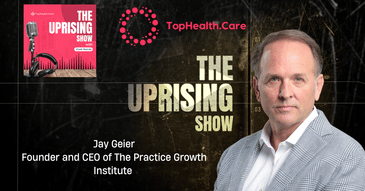
Welcome back to The Uprising Show! In today’s episode, host Vivek sits down with Jay Geier, founder and CEO of The Practice Growth Institute, who brings over 30 years of expertise in the medical and dental practice space. Together, they uncover the often-overlooked factors that determine a practice’s true value and discuss why less than 3% of doctors know what their business is worth before they sell it. Jay Geier shares insights on why two seemingly identical practices can sell for vastly different amounts, emphasizing the crucial role of owner independence and building scalable systems. Drawing from his extensive experience, Jay Geier explains how to attract new patients, create a referral-based practice, and prepare for an extraordinary exit — so you’re not just running a practice, but building a real business. Whether you’re a doctor thinking about selling someday, or simply want to maximize your practice’s potential, this episode is packed with actionable advice you can use to start making changes right now.
Timestamps:
00:00 Early business lessons and healthcare focus
05:34 Learning pay-per-task method
07:47 Discovering a phone system hack
11:33 Transforming Customer Experience in Dentistry
14:45 Planning for an extraordinary exit
17:07 Understanding business valuation basics
21:22 The importance of coaching and feedback
22:47 Training and developing team members
27:50 Importance of referral business
29:59 Targeting high-end clientele
32:34 Building a Strong Medical Team
36:01 Managing workaholism in healthcare workers
39:02 Focusing on patient experience
Unlocking Maximum Practice Value: Takeaways from Jay Geier’s Uprising Show Interview
Looking to sell your dental or medical practice for top dollar? Want to discover the key differences between practices that sell high and those that fall short? In a recent episode of The Uprising Show, host Vivek sat down with Jay Geier, founder and CEO of The Practice Growth Institute, to share expert advice on elevating practice value and planning for an extraordinary exit. Below, we unpack the actionable insights and transformative mindsets Jay discussed so you can build a thriving, sellable practice.
Less Than 3% of Doctors Know Their Practice’s Worth
Most doctors are flying blind when it comes to selling their businesses. Jay Geier revealed that less than 3% of doctors actually know the value of their practice until the day they sell. This lack of preparation often results in disappointing offers and missed opportunities for a lucrative exit.
Why Owner Dependence Hurts Your Practice Value
Two practices can generate identical revenue, yet one often commands a much higher sale price. As Jay Geier explained, owner dependence is the most significant issue holding practices back from premium valuations. Buyers want businesses that thrive without the owner treating patients or holding the reins tightly. The solution: step out of patient care and focus on hiring, training, and scaling your provider team and leadership. Aim for a business in which the owner’s production is zero.
The Stages of a Doctor’s Career and Planning for Exit
Through decades of advising practices, Jay Geier observed that doctors’ priorities shift every 10 years. New practitioners enter a “warrior stage,” driven and energetic about clinical work. As doctors age, they transition towards recognizing their mortality and facing larger personal and family responsibilities. Understanding these stages can empower practice owners to make proactive decisions about scaling, delegating, and preparing for eventual transition or exit.
Building a Scalable, Sellable Practice
A hallmark of a high-value medical or dental practice is scalability. According to Jay Geier, a practice should not hit a growth ceiling once the owner’s time is maxed out. Instead, successful owners create systems to replace themselves in clinical and business functions, allowing for more providers and more patients. This not only boosts valuation but ensures a smoother sale process.
The Importance of Team Building and Training
Patients interact with your team far more than with you. Jay Geier stresses the importance of wrapping your clinical skills with an exceptional team. Investment in ongoing training and leadership development ensures quality and consistency, making the business attractive to buyers. Avoid dependence on one indispensable office manager, as this can create risks and stunt growth.
Technology: Use Wisely, Don’t Replace Human Touch
In an era of automation and AI, Jay Geier advises careful integration of technology. While after-hours and backup tech solutions can help, the primary mode of patient communication should remain human-centric. He shares that buyers and patients alike dislike robotic phone systems. Human interaction, especially as a frontline experience, drives referrals and business reputation.
Referrals Outperform Digital Leads
Not all patients are equal. Jay Geier emphasized the value of patient referrals. Referred patients are easier to work with, more loyal, and less price-sensitive than those acquired through ads or online platforms. Fostering a referral-based practice can significantly enhance your business’s value and long-term success.
Take Action: The Five-Star Challenge
Ready to assess where you stand? Jay Geier recommends that practice owners take the Five-Star Challenge, available at the Scheduling Institute’s website. This assessment measures how well your team handles new patient calls and provides a baseline for improvement. Start here to open your practice to growth and increase its market value.
Final Thoughts
Building a valuable, sellable practice is a journey that requires forward-thinking and strategic action. Focus on reducing owner dependence, investing in your team, integrating the right technology, and maximizing patient referrals. The insights from Jay Geier offer practice owners a clear roadmap to not just sell someday, but to build a business that thrives now and in the future.
For more actionable tips and the full conversation, listen to this episode of The Uprising Show with Jay Geier and Vivek.
The Uprising Show Website: https://theuprisingshow.com/
Vivek Nanda's LinkedIn: https://www.linkedin.com/in/viveknanda1/
Vivek Nanda's Twitter: https://x.com/vickks
TopHealth Media Website: https://tophealth.care/
“Disclaimer: Informational only. Not medical advice. Consult your doctor for guidance.”
[00:00:00] Less Than 3% Of Doctors Know What Their Business Is Worth Before The Day They Sell It. You Know Two Businesses, They Are Doing Identical Revenue. It's Always Surprising To Many People That One Sold For A Lot Of Bigger Amount Compared To Another One. What's The Differences Between These Two Businesses? I Mean Owner Dependence Is The Biggest Issue. Nobody Wants To Buy A Practice That Is Totally Dependent. You've Got To Get Out Of Treating The Patients. And You've Got To Get Into Hiring Doctors, Quality Training And Controls,
[00:00:30] And You've Got To Get Scaled. So In A Perfect World, We're Selling A Practice That Literally Has Zero Production From The Owner. This Is The Closest Thing To Dying For A Doctor That You're Going To Get To. It's Like They're Giving Up The One Thing That They're Really Good At And It Just Scares Them. Hey Everyone, Welcome Back To The Uprising Show.
[00:00:53] Today I Have A Very Special Guest Who Has Spent I Think 30 Years, Maybe Even More Than 30 Years. We'll Talk About It In Medical Practice Space, Especially In Dentistry. The Thing That We Want To Shed Light Today Is Very Specific On This Topic That We Are Living In A Very Extraordinary Time Today. And I Hear Every Now And Then That Every Dental Office Is Receiving Some Call To Buy Their Practice.
[00:01:20] Some Are Tempted, Some Ignore Them And Some Have No Idea What To Do With That. So Today We're Going To Get Answers Of All These From Our Very Special Guest. I Want To Welcome Jay Geyer. Jay, Welcome To The Show. Thank You, Glad To Be Here. Love The Name Of Your Podcast. I Feel Like We're Going To Fight For A Cause Or Something Today.
[00:01:42] So Jay, Before We Start The Conversation, Give Us Like A Couple Of Liners About What Do You Do, Who You Are, When We Go Into Conversation. So I've Been Really Fortunate, Had Some Great Mentors When I Was Young, Started My First Business When I Was 18 Years Of Age, Had A Few Jobs, And Then Really Sort Of Discovered Something, Working In A Healthcare Facility. And It Was This Sort Of This Understanding That You Have To Have Patience, Right?
[00:02:11] So No Matter What You're Doing, You Have To Have Patience. And So I Was Really Lucky To Kind Of Discover That Businesses, And Particularly Healthcare Businesses, Do A Lot To Sort Of Block The Patients From Coming In.
[00:02:22] And So I've Sort Of Cracked The Code Of How You Attract New Patients And What Are Some, I Don't Know, Maybe You'd Call It Tricks, But Some Really Simple Things To Make Sure That That Flow Of New Patients Exists, To Allow Them The Back, The Providers To Be Able To, You Know, Expand Capacity. Capacity In The Back.
[00:02:44] And So And Then You Know, I've Been Really Focused On The Dental Niche And Other Medical Professions, But Primarily Dentists With Probably 20% Of Our Clients Being Other Niches. So And Then What We Did Is, You Know, For The Last 25 Years, I Started Solving Whatever Problem You Got By Having A Thriving Business. So They Got Into The Staffing Issues And The Training Issues And Money Issues And All Of The Things That Everybody Says Doctors Are No Good At.
[00:03:12] That'S The Stuff We Do And To Try To Make Them Really Be Better Business Owners And Great Doctors, Which Is A Challenge. It Is And Of Course Jay Is Founder And CEO Of Practice Growth Institute And We Will Share All The Details In Our Show Notes For You To Check It Out. But Jay, I Want To Say This Thing, One Thing That You Mentioned Especially About You've Come From Marketing Background, Business, Telephone Background. Yeah. A Lot Of Time We Think That, Oh, You Know, Get More Leads. That'S How You Grow The Business.
[00:03:42] But I Think You Had This Moment Long Ago, You Realized That No, Lead Is Just One Part Of The Equation. Magic Happens After That. Is That A Correct Statement? Well, For Sure. I Mean, You Know, My First Invention, You Know, My First Proposition To Any Doctor Was This. I'll Get You A 10 To 40% Increase In New Patients With No Additional Marketing Or Advertising In 90 Days Or Less. I Could Deliver That.
[00:04:10] And Then What Happened Was You Have Chaos In The Back, Meaning That The Team Is Like, Don't Send So Many Patients Back Here. And Then All Of A Sudden It Reverberates Back Up And They Close The Front Door. And So I Had To Figure Out How Really To Go All The Way Through The Business. And So For Instance, One Of Our Most Popular Trainings Is What We Call The New Patient Experience, Where We Put In Robert Cialdini's Principles of Influence.
[00:04:40] I Mean, We're Literally Putting It In The Visit, You Know, And We're Approaching It More From A Scientific Way Instead Of What You Normally See, Which Is You Come In And Somebody Is Like, Sit Down And Fill Out The Paperwork, Right? They're Just Sort Of Like Barking Orders At You. So The Experience Is Really Where The Magic Is. Yeah. And We're Going To Talk About This, But Let's Take A Step Back A Little Bit, Okay? So Where You Were Born And Raised, Where Your Journey Started, And Were You Like The Kid Who Was Like,
[00:05:09] I Want To Be An Entrepreneur From The Early Years? Or Were Your Folks, Your Parents, Were They Entrepreneurs? Let's Start There. Yeah. Grew Up In Madison, Wisconsin. My Parents Got Divorced When I Was 12, So Very Independent. Ended Up, My Dad Ends Up Taking A Job In Tuscaloosa, Alabama. So We Move There. I End Up Go To Alabama. It Started For Me When I Was A Kid And It Was Cutting Grass. And I Learned Very Early On, They Would Try To Pay Me By The Hour And I Would Say,
[00:05:38] Look, Just Give Me A Price To Cut The Grass. And The Guy Would Say, 20 Bucks. And I'd Be Like, Fine. Like 10 Minutes Later, I Was Ringing The Doorbell To Collect My $20 Because I Was Running. I Wasn't Going The Lawn Mower Rate. I Thought I Could Knock Out This Yard. And The Guy Would Come Out, He'd Look At The Yard, And He'd Be Like, Okay. He'd Try To Change The Way He Paid Me. So I Learned Very Early On, I Needed To Get Paid On Performance. Because I Didn't Want To Get Paid By The Hour.
[00:06:05] And So I Had Many Businesses Through The Years That You Grow Out Of. I Always Understood If I Could Create Value For Somebody. And I've Always Loved That, The Idea That You Create Value For Somebody And Then Money Just Kind Of Follows That. Not Money And Then Value, Value And Then Money. That Order Is Really Important To Me. People Say That I Am Kind Of Wired Probably Not To Work For Anyone If That's... I Learned That Early On.
[00:06:35] Yeah, It's Funny. I Just Was Speaking At A Conference In Wisconsin For The First Time Being There. Really Loved It. But It Was Like You Mentioned Madison, Wisconsin. I Was Like Literally Just Last Month. Yeah, I Left There When I Was 12. You Know, So I Been In The South. So I Live In Atlanta Now. We, You Know, I Met My Wife In Birmingham. We Moved To Atlanta. We Raised Our Kids Here. So I Been In Atlanta For 30 Plus Years. So This Is Really Home. And To Your Current Business, Right? So What Was The Moment When You Were Like, You Know What? We Got Something Here.
[00:07:04] Let's Do Something About It. It Was Funny. I Was Working For A Guy In Atlanta And You Know, He Hired Me And He Said, Listen, I'm Going To Pay You Every Time We Get More New Patients. So I'm Like, Okay. And I Needed To Get To Atlanta Because My Girlfriend At The Time Was Living Here And I Wanted To Be Here. And So I Took This Job. And He Was A Smart Guy. And So I Said, So Wait A Minute. So If I Get, No Matter How Many I Get, You Are Going To Pay Me Something? And He Goes, Yeah. And I Mean I Went Crazy With That Guy. I Was Like A Lunatic. I Thought I'm Going To Figure This Out.
[00:07:33] And I Just Had This Four Year Experience Of Learning How To Generate New Patients. And I Mean I Was A Beast. You Know, And I Had Little, We Had A Little Kid. There Needed To Be Diapers Paid For It, All The Stuff You Have When You Have No Money, Right? And So I Just Learned This Craft, You Know, And How To Do It And What Are Some Of The Key Elements? You Know, And Then I Discovered At One Point, You Know, We Had Five Offices. And This Was Really The Thing That Ticked With Me.
[00:08:01] You Know, We Used To Close Them At Lunch And Like Two Half Days. And So I Came Up With This Crazy Idea. I Was Like, What If I Forward All The Phones To... And By The Way, We Did It With The Old Star 67, Which Was You Picked Up Your Landline, Hit Star 67, And Then You Entered The Number You Wanted It To Forward To, Right? And So I Hired A Gal And She Sat At A Desk In My Office And We Just Drove All The Calls In.
[00:08:26] And The First Month We Answered The Phones, In All That Time Where The Phones Were On A Machine, We Scheduled 50 Extra New Patients That Month. And I Was Like, I Have Discovered The Gold Mine. And So That Was The Beginning Of A Discovery That If You Change The Entire Strategy Of How You Process Inbound Phone Calls, And You Train The Person And You Get Them To Really Know What They're Doing,
[00:08:55] That's How I Could Get 10 To 40%. So Even Today, Like, You Know, If Somebody Is Listening To This, I Call It The Five Star Challenge. And So If They Were To Go To Our Website, Which Is The Scheduling Institute, They Can Go And Just Take That Five Star Challenge, And We'll Make A Call For Them And They Will Be Shocked At What It... And Then We'll Educate Them On What To Do. But Most People, It's Sort Of Like Their Lowest Paid Employee Is Answering The Phone With The Least Amount Of
[00:09:23] Training And They Are Just Sending Patients Off Like You Wouldn't Even Believe. I Actually Came From Germany To U.S. That's How I... Okay. ...Country. I Actually Brought A Company Which Was A Health Tech Company From Berlin To New York And It Was A Patient Communication Software. So Texting. Okay. Yeah. And How I Learned The U.S. Health Care System Was Exactly Understanding This Communication Problem That You Are Saying. Awesome. I Was Sitting And Shadowing With All The Practices In Manhattan Trying To Figure Out
[00:09:53] How This Thing Works When The Call Happens, Right? So And Then We Built The Product And We Made It Like A Team-Based Product And Every Time The Message Will Come In The Front Office Will Triage It But Instead Of Keeping The Patient In The Dark You Can See Everyone In The Chat There Is Phenician, There Is MAPA... Oh, I Love It. ...This Thing. That's Great. So, You Know, Rest Is History. That Company Grew, We Grew It To 60 Employees And Then That Got Acquired By An HR Company Afterwards
[00:10:21] And But I Was... ...How You Are Saying Our KPIs Were To Show Them, Look, You Did Not Have To Make X Number Of Calls And You Converted X Number Of Patients To Here And These Number Of Patients Actually Came Back To You To Prove That. I Love That. So You Understand That Business, Right? And I'm Sure You Were Surprised At How Well It Worked.
[00:10:46] And What I Found Was A Lot Of Doctors Don't Know How To Do Math So They Couldn't Calculate You Know, If You Take A 20 Extra New Patients Walking In The Door A Month Times The Case Value Times A Year Times 10 Years. This Is Like... I Call... I Used To Call It Like It's As Good As Drilling An Oil Well Inside Your Office, Right? So I Love That. To This Day Though This Problem Is Humongous, Right? Because Afterwards I Have Built Telehealth Companies And Again, If You Think About Telehealth Company,
[00:11:14] The Number That Matters The Most Is... Leads To Conversion To Appointment, Right? And I Still See It Even The Best Of Operations Are Like 10%, 15% Of People That Come Into Actually Getting An Appointment And That's Considered Good. What's Your Take On Like... What's A Good Number Look Like? Number One, Everyone Is Trying And Particularly Like When You Get Into These Group Practices Or DSOs Or Corporately Owned...
[00:11:43] I Mean, Their Best Idea... They Think That Tech Is What's Going To Transform And What They Do Is They... They're Only Seeing It Through One Set Of Eyes Which Is Financial... I Just Always Take An Attack That You Gotta Take Care Of Your Customers I Mean... And We Have Math That Proves Out That If You Will Spend More Time And You Will Satisfy The Customer... That Customer Will Turn Around And Send You Somebody 24 Hours After They Come In Your Office And It'S Like...
[00:12:10] And That Math Is Really Easy To Get Wrapped Around... Meaning That We Basically Want To Systematically Duplicate Every Patient And When You Give Them An Experience That Is Like That... They Have No Choice But To Tell Someone Just Like They Speak Of The Negative Experiences So We're Looking To Create An Experience That Is Sort Of Out Of The Norm You Know I Think... You Know... Certainly In Dentistry You Have Some Really Bad Statistics Like... You Know... 60% Of The Population Is Afraid To Go To The Dentist Or Some Astronomical Number
[00:12:40] So When You Can Then Have A Visit Occur And Not Scare Them And They Feel Like It'S Almost Like A Ritz-Carlton Experience... They Tell Everybody They Can And Those Patients Come In Alright So Let'S... Let'S Dig Into The Main... Yeah... Right So... When You Hear Someone Say Like... You Know... I Want To Sell My Practice Someday... Right... You Know... And You Probably Hear Especially... Everyone Has That Dream At Some Level When They Are Starting The Business I Guess What'S The First Thing That Comes To Your Mind... Because When I Hear A Lot Of People Are Thinking
[00:13:09] Either It'S More Like A Question They'Re Just Throwing It Out... Or They'Re Saying Well... Yeah... This Will Happen When I'M About To Retire And Then We Will Think About It... Sure... Well... Look... I'Ve Been Building Practices For Really Almost 30 Years Now... And... What I've Learned Is That... You Know... A Small Medical... Dental... Practice... Whatever You Want To Think About... These Are Small Businesses... They'Re... They'Re In A Lot Of Communities... You Know... I'Ve Had Clients In Every State... Of Like... 15 Different Countries... And...
[00:13:38] These Are People... These Are Human Beings That Employ A Nice Group Of Employees... They... They'Re Important In The Community... Right... And... But Also... They Age Out... And... You Know... Father Time Always Wins... And... And... They'Re Eventually Gonna Age Out... Everyone Ages Out Of Their Business... I Mean... I Don'T Care... You Know... There'S Some Exceptions... But Like... That Is Real... Okay... And... But The Problem Is... Is That The Businesses Are Not Naturally Scalable... So... You Know... When A Doctor First Comes Out... And They'Re... You Know... Once They Fill Up...
[00:14:08] There You Go... That'S The End Of It... There'S No... Like... Once All The Time Is Sold... It Becomes Very Difficult To Scale A Business... So... One Of The Decisions I Made... Was Very Early On... Was To Not Try To Just Coach People... To Just Become Very Busy... Because Once You Get Really Busy... You Become Complacent... And You Just... Basically... You're Like... I Don'T Want Any More Patients... You Know... And That Happens A Lot With People... So... We Had To Figure Out... How To Build It... How To Scale It... Because... When You Build It... You'Re Going To Be Frustrated...
[00:14:38] With How Busy You Are... And It Has To Move To A Scale Model... Where Now You Get Other Providers... And You Become The Owner... And Then... We Have A Thing We Do... Which Is Called The Extraordinary Exit... I Think You Should Keep A Business As Long As You Possibly Can... For A Multitude Of Reasons... And So... We Look At It Holistically... The Beck... And So... I Will Start Coaching Clients... I Mean... I... I Started Out Just Trying To Grow Their Business... But What I Realized They Needed Me To Do... Was To Help Them With Their Money... Not Managing It Per Se... But...
[00:15:07] Making Sure That During Their Career... That They Were Banking Enough Money... Not To Make... You Know... If You Sell Your Business... And All It Does Is Go To Pay Off Your Debs... That'S A Terrible Exit To Me... Like To Me... The Extraordinary Exit Is Like This... One... You've Paid Off Or Deleveraged... Most Of Your Debt... Two... You Figure Out... What You Need To Live... And You Have Actually Spent Some Time On It... So You'Re Not Just Exiting Out Of Frustration...
[00:15:36] You Have A Financial Plan... You Have A Life Plan... And You Can Accomplish Your Goals... Right... And... Those Are To Me... The Things That Make A Great Exit... And Then... But You Gotta Learn... If You... You Know... If You Sell Something For $10 Million... By The Time... The Tax Man Takes His Money... You'Re Down To $7... Then... You Know... You Go Buy A Couple Things... Pay Off Some Debs... You May Be Down To $5... Now The Question Is... Can You Live Off The Interest Of $5 Million... You Know... So... Most People... Those Are Questions... That They Have To Answer Them Before... In My Opinion... And Let's Say... You Know...
[00:16:05] Two Businesses... They Are Doing Identical Revenue... Right... So... But... It'S Always Surprising... To Many People... That One Sold For... You Know... A Lot Of Bigger... Amount... Compared To The Another One... I'M Sure You've Seen This Scenario... Can You Walk Us Through... And What'S The Differences... Between These Two Businesses... You Typically See... Well... I Mean... I Think The... Look... Our Guideline... Would Work Something Like This... If... I Mean... The Problem Is Basically... The Preparation Period... Okay... So...
[00:16:35] We'Ve Actually... Sort Of... Recently Modified Our Model... And... Basically... I'M Teaching Prep... At The Beginning... Because... I Thought I Could Catch Them... But I Can't... Like... It'S Sort Of Like... You Know... That Thing... Where Somebody Goes... Hey... I Don'T Want To Be Put On Life Support... Right... Well... If They Make That Decision Too Late... They Could Live... Years And Years... Right... So... And Then You Can'T Make The Decision... So... I Think We're... We'Re Really Now Modeling Out... At The Beginning Of The Relationship... So...
[00:17:04] Let'S Say... I Got A Guy... And He'S Got 15 Years Left... Well... We'Re Going To Start On Day One... And... I'M Going To... Put Him In A Financial Calculator... Get His Information... His Net Worth All Done... Then What We Found... Is That... Literally... Less Than 3% Of Doctors... Know What Their Business Is Worth... Before The Day They Sell It... So... We Found That... You Know... Like They Don'T Even Know What It'S Worth... Which Is Interesting... Which Means They Don'T Even Know What They're Worth... So... We'Re Really Pushing... To Get The Value Early...
[00:17:34] Then To Spend As Much Time As You Want... To Make The Value Go Up... But... I'M Telling You Right Now... That... Most Of Them Are Finding Out... They Go... I'M Frustrated... I Don'T Want To Sell The Practice... They Allow Someone To Come In... And Valuate It... And They're Allowing The Buyer To Evaluate It... You're A Smart Guy... You Would Never Do That... Right? You... That'S Like... I Was Going To Ask... Like... Not Every... Dentist Is Ready To Have This Conversation... Right? They Are Not Even Thinking... Like... Oh... Should I Be Talking About This... Right Now...
[00:18:03] My Exit... Right? So... How Do You... I Guess... What Can You Tell Them... This Makes Them Realize That... No... This Is A Conversation... That Should Happen Now... I Don'T Know If This Will Make Sense... But... Here'S What I'Ve Learned... We Use A Ten Year Model... So... And The Truth About Everyone'S Life... Vivek... Is That Every Ten Years... Your Priorities Change... So... If You're Looking At A Thirty Year Old... That'S Still... That'S The Beginning Of The Warrior State... Age... Okay... So... Like... A Thirty To Forty Year Old... This Guy Is Like...
[00:18:32] I Will Put The... Just Put The Patients On My Back... I Will... I Will Dog Sled Them Across... And... You Know... I Mean... They Got Energy Like... No Tomorrow... And Then... They Hit 40... And They Enter The Wounded Stage... Which Is Like... Where Your Mortality Starts To Set In... You Lose A Parent... Your Kids Are Aging... And You Realize They're Not Perfect... And You Have... They Have Marital Difficulties... You Know... I Mean... Life Is These Stages... So... The Real Art Here... Is To Get Them Through The Stages... And...
[00:19:02] What I've Done Is Said... Look... Let's... Let's Improve Your Net Worth Every 10 Years... And... The Peak Of Expenses... That... In A Normal... Traditional Marriage... And Family... Is Around... 54 Years... Of Age... Now... If They Get Divorced... And... Marry... One Of Their Team Members... Or Whatever... That... Now... Bumps Back... So... You Pretty Much... I Think In General... You Want To Get Over The Peak... Of Your Expenses... Then... If You Have A Transaction... You Have A Much Better Handle...
[00:19:31] On... What Your Expenses... Are Going To Be... Very Interesting... So... I Think... Those... Exceptions... You Get Some Young Guys... That Are Like... They Are Going To For Five Of These Things... And That'S... That'S Different... But... That'S... That'S... The Entrepreneurial Doctor... Right? Yeah... Yeah... That'S... That'S Great... This Is Also A Question... Especially Also Happens In... You Know... Small Businesses A Lot... The Valuation... Right? Like... Yeah... Owner Themselves... Influence A Lot Of It... It'S A Good Thing... Or A Bad Thing...
[00:20:00] That'S First Question... Right? But... Also... The Second Thing Is... Can A Practice... Actually Become... Less Valuable? Sure... Because... Depends Too Heavily... On The Founders... I Mean... Owner Dependence... Is The Biggest Issue... You Know... I Was Just Shooting... One Of My Weekly Videos... And I... I Set Up This Little Display... And I Took A Knife... And I Jabbed It In This Box... I Said... You're Not Gonna Like This... But I Need You To Wake Up... And I Need You To Realize... That Treating The Patients... Is Not What You Need To Be Doing... Like... It'S A Group Of People... That Are Really Trying To Grow Their Practices... And I Said...
[00:20:30] You've Got To Get Out Of Treating The Patients... And You've Got To Get Into... Hiring Doctors... Quality Training And Controls... And You've Got To Get Scale... And Every Minute You're Treating Another Patient... Is Not Getting You Closer To That... So In A Perfect World... We're Selling A Practice... That Literally Has Zero Production... From The Owner... And Do You See Like... In The Beginning... Yes... There Will Be Dependency On The Founder... Right... And That'S Why You Have Those Intervals Matter... Like The Ten Years... Kind Of How You Say... But...
[00:20:59] Is It Okay... Let'S Say... Because This Transformation... Might Not Happen... Somebody Who'S Early On... Is It Okay... To Be Dependent... Be Heavy... First Few Years... And Then There Is A Roadmap Of... I Guess... When Do You See... Yeah... That Changing... What Is... Well Like I Said... In Their 30s... I Mean... They're Like... What? I'M Not Going To See The Patients... I Mean They're... I Mean... You Gotta Get A License... To Go Treat Patients... He Wants To Treat Patients... Right... There'S No Doubt... He Ain't Thinking About Anything Else... Yeah... And... I Think Really... What Happens With That... It'S The Amount Of Time... That They Get Sucked Into... I Call It Sort Of...
[00:21:28] The Continuing Education Trap... Which Is This Lifestyle Of... You Know... Traveling And Learning... And Trying To Become The Best... And You Have To Balance That Out... So Like... If You Think About All The Great People In The World... And I Know... You Know... You're A Smart Guy... You've Obviously Been Coached By People... I'Ve Been Coached By People... People Need Coaches... Right... Because When You Put Two Minds Together... You End Up With Three... And It'S A Better Situation... And The Worst Thing... And Doctors Have A Problem That... They're In Charge...
[00:21:57] And Nobody Can Tell Them Anything... Because They'll Fire Them... So Team Members Are Not Going To Tell You... You're Doing Stupid Things... Right... I Will... And Because I Don'T Really Need The Money... Meaning Like... It'S Not Like... I Would Rather Give A Client The Truth... And They... They Despise Me For A Period Of Time... They Will Eventually Come Around And Know I Was Right... So You Gotta Also Have Somebody Who Can Actually Stand Up To You... And Give Advice... A Lot Of Doctors Are Just Very Uncoachable... And They're Not As Smart As They Think...
[00:22:27] They're Street Smart... But When It Comes To Business... They Are Not As Smart As They Think They Are... Generally... Yeah... So Do You See Like... You Know Of Course... These People Are Good In Education... They Love Getting Education... Sure... That'S How It Is... But When It Comes To Business Education... When You See This Fall Apart... Well... The Gap Is Too Much... Well... Well... Number One... I Don'T Know Where You Get It... So Like... Like For Us... Right... We... We Have... Like... For Instance... The First Product Where We Just...
[00:22:56] Get Them This Great Result... But Then... I... I Run An Entire University... For Team Members... So Like... Next Monday... I'Ve Got 32... We Call Them Associate Doctors... And They're In For Skills Training... You Know... And They Work For One Of Our Clients... And We're Teaching Them How To... How To Interact With A Patient... And How They Need To Carry Themselves... And... And... You Know... We're Also Trying To Get Them To Go... Hey... Let's Talk About Your Student Loans... Let's Put This On A Pay Down Plan... Because You Don't Want To Keep This Thing Your Whole Life... And So...
[00:23:25] So We Have A Full University... Where People Come In... We Develop The Team Members... And Then We Coach The Doctors... And... And Then We Dispatch People Into The Offices... To Actually Do On-Site Trainings... Where... You Know... That'S Going To Transfer... So You Have To Kind Of... Treat It Holistically... I Guess You'D Say... Wow... Okay... So... So You're... In Your Business... Even The Staff Comes To You... We're... We're Normally Sending... Like You Would Send Somebody... Who'S Maybe A Leader... So Like... We Have A Whole Program... For What Would Be...
[00:23:55] Like... Office Manager... And We Use A Team Leader Concept... A Lot Of People... And By The Way... I Think It'S Worth Talking About This... Solo Office Manager... I Mean You Look At A Lot Of Medical Practices... They're Notorious For... You Know... I Don'T Know... There'S This One Lady... And She Is Like... That Is Very Unhealthy... And... What Happens Is... They're Never Getting The Truth... Because She'S... I Mean I Can'T Tell You How Many Times... I'Ve Heard... Oh Yeah... She'S Great... She'S Great... I Found Out She'S Stealing From Me... You Know... Like... I Mean... She'S So Great... I Mean You Know... I Mean I Can'T... I Mean I Can't Tell You...
[00:24:32] I Mean I Can'T... I Mean You... Build a business, not just a practice. So let's say someone comes to you and says, can you score us, tell us which way we are. Is it still like a business yet or not? Sure. Well, like I said, I made this thing called the five-star challenge.
[00:25:02] And what that means is we're going to call your office like a patient and we're going to score it. And we use a five-star system. And if they get a four or five, man, you go crazy. You can market. You can do whatever you want. But if you're a three or below, you got to get that cert. And we certify them. So we monitor their calls. We certify them. You basically want to have a four or five at all times. And then you're free to do whatever you want. But they really shouldn't be going out
[00:25:29] and spending a bunch of marketing when they get a zero. And that's very common or a one, which basically just means that when you call, there is no system to get the patient in the door. There's actually a system to keep them out. And so we're really trying to systematize as much of it as we can. And for your own business, as you're training all these offices, are you like technology agnostic? Doesn't matter what they're using. And you suggest your own.
[00:25:59] How does that work? No, we're basically saying, listen, you can use technology after hours. You can use technology for your rollover calls. But nobody wants to call up and talk to Bean right now. I mean, and you still have, I mean, a doctor's office is typically still a high call thing. Like they call. I mean, and so none of these companies that said, you know, you could automate, there's no evidence that suggests this.
[00:26:29] And there's certainly no evidence that suggests that the consumer likes this more. Yes, they want to order their sandwich, get it delivered without talking to somebody, fine. But they're calling. We know this from practices that get acquired. And the first thing the private equity company does is puts a voice system in. And you'll see a radical reduction in new patients almost overnight. So we're suggesting technology, but not at the expense of service.
[00:26:58] I'm sure you get this also, because AI and, you know, every doctor has this. Yacht-Cook syndrome. They're like, what are we going to do? And then how, what's your take on that, I guess? It's progressing. It's progressing. We're running tests. We're trying to figure out, you know, and like I said, we're using it for after hours calls. We're using it for backups, but we're not using it as the primary. And you got too many people that just want to jump and use it as a primary.
[00:27:26] And that data is not proving out to be right. Yeah, yeah. I mean, I think at the end of the day, it's a trust business, right? Like it is people's trust is in their health, right? They want it. And so humanizing it is important. But yes, I don't want to waste time on booking appointment, for example. But I do want to talk to a doctor when I have to. That's important. But don't you think, and Vivek, you've had businesses, you understand this. Like, I think what happens is
[00:27:56] we stop thinking about the fact that if our business is a referral business, meaning that it is, remember the greatest way to influence anybody is to have someone you know say something favorable about. That is like, there's no better way. If you got, if your doctor had a patient come in, the best patient will always be the referred patient. It's not going to be the ZocDoc patient that they, you know what I'm saying? That they found on the internet. It's going to be, Jay Geyer comes in
[00:28:25] and he was referred by Vivek. And this guy is going to be the best patient you ever had because he's not going to bug you about the money. He's there. You follow what I'm saying? And I think a lot of doctors get just like, I don't know if you forget that and you say, well, I just want everything to be digital. The digital patient is not as good as the referred patient. So I think it's how you look at the business. It's very easy to go, hey, let's buy the tech and make it answer the phone.
[00:28:55] But I don't think that's been, that's sort of like saying, let's drop all insurances, right? It doesn't, sounds good, but doesn't quite work as well as they think. Yeah. I think the key point here is what you're mentioning is patient source, not all are same, period. You got to respect how you're getting them and you have to respect if it's referral, obviously it's going to be much, much better than just running ad and getting someone, right on Google ad. You have no relationship with. Okay. But it's sort of like if we look at,
[00:29:25] like I recently did a, you know, I was looking for, I've done the longevity things for years, right? And it's very fragmented. And so I finally found a place that does everything. And, you know, we fly in town, spend the day there. They do all the testing, right? They've invested millions in the facility. And so I'm sitting at the lake this weekend and I have a neighbor who's very wealthy guy and I refer him.
[00:29:51] And so again, that guy is going to pay out of pocket the $25,000. He's going to bring his spouse. After he goes, he'll refer three or four of his super rich buddies. Does that make sense? And now you've tapped into these customers that are, they're not going to question the money. They're just like, I want that. I'll pay the money. And this is where I think we have to remember, if you're a doctor trying to elevate the private pay business,
[00:30:20] well, don't then put all your phones on a computer. You know what I mean? Like that's not congruent. Like it depends, I think too, who your customer is, right? If you want the bottom customer, make them run through hoops. But people of any kind of means don't run through hoops, right? Yeah. I want to ask you this question. So again, you touched it briefly that, you know, like when creating a practice that works without you, that's kind of how you create, right? That's what you want to get to.
[00:30:49] I think dentists or medical practice owners get the idea of what you're saying, but in their mind, they're thinking, what will they do when that happened? Can you put it out exactly what they should be doing once that happened? What exactly are they doing? Sure, sure. Okay, so this weekend, I'll be in Colorado Springs with what I call like my top group of people. And so if you, about 50 doctors,
[00:31:15] and probably 50% of them do not treat patients, meaning that, and the other 50 are down to a minimal, 50% are down to a minimal, and we do a taper down. So first you taper. So if you took a five-day work week and you said, let's taper half a day a year, right? In 10 years, you won't be treating patients. If you're aggressive and you say, I'm going to drop a day a year, it'd take you five years to see no patients. So like that's the first math, okay? So are you really telling me it can't be done?
[00:31:45] I mean, it's very hard to argue with that taper, right? Yeah. Okay. Then the hardest thing is to get the first other doctor. So the hardest thing is to get the first other person. Once you get the first other, I mean, that's my hardest thing is to go like, just get another doctor. Then once they get another doctor, and then it's sort of, we just scale up, but it's that first one's the most painful, quite frankly. And so if the first one leaves you or quits, then sometimes they're devastated. We just got to get through this. It's like anything, you're not good at it.
[00:32:13] So, and then what we basically have to do is we have to be, they have to be team building. So like what we're doing is we're building a better team. We start at the front desk, we then go, and we just build a better team all the way back. If you've been to many doctors, right? You do most of the interactions, not with the doctor. Yeah, true. It's with the team. Yeah, it's with the team. Yeah. I mean, so you can like the doctor, but if you hate the team, you ain't going to tell anyone to go there. So we're, I think of it like this. If you're a good doctor,
[00:32:42] you should think about wrapping yourself with the greatest team possible. But it's a little hard to do that all by yourself. What we found is when we come in and we give the team the concepts and give them what to do, they can process it. But it's very hard sometimes, even in my own business, why I bring outside people in, if I'm constantly telling them what they need to do, it just isn't as effective. I go find people to come in and say the same thing. And that requires your ego getting out of the way. So a lot of people,
[00:33:12] they don't want to let anyone teach their team. They do all the teaching. But if you put a clock on it, a part-time Ritz-Carlton employee gets 250 hours of training in a year. Well, if you actually would time how much training your team gets, if you're a doctor, I'm going to tell you, it's an abysmal number. I know someone who's a neurologist. He is running his solo practice with clinical staff, right? And I had this discussion multiple times with him,
[00:33:39] like, hey, you need to get the first doctor. Yeah, yeah. And every time I tell him this, he says that, yeah, I know this, but this is like, then I will have to invest more time right now to train it, to get it. Yeah. What do you tell them? Yeah, listen. Tuck in the tank. Okay, so I've done this so many times. I went and hired some of the, some really great clinical psychologists. And I said, I need you to help me solve this problem. And so we set out to do this. And it was kind of like, I said, okay.
[00:34:09] And it was great because her husband was a doctor. And so she had experience with it. She's very smart. And I was like, I need you to break it down. I said, I'll, you can interview people. You can do it. She's like, Jay, I don't need to break it down. I'm going to tell you what it is. And, and I was like, okay, well tell me. She goes, this is the closest thing to dying for a doctor that you're going to get to. Like, it's like the meaning of their life. It's like, they're giving up the one thing that they're really good at. And it just scares them.
[00:34:37] And it's like, and she said, it's like the closest thing to having a foot in the grave because they do not know what they're going to do after, which is what your question was. And so what we realized is you have to give them a model. And so it turns out that a lot of doctors, this is really interesting, right? So a lot of them have families and they have young kids. And it turns out that, you know, sometimes you just need to be a dad or a mom, right?
[00:35:03] You don't just, and it's like, I mean, when you really start adding up all the things they can do. So it's like, okay, are you a good parent? No. Okay. Like what you're at the end, what they're going to be mad about is that they weren't a good parent. They weren't a good spouse. They weren't a good friend. And this is how, you know, we got to get them to look at their life a little more than one dimensional, get them going on mission trips, get them to take vacations. I mean, I'm a big, I'm saying go away.
[00:35:32] And you wouldn't even believe how hard this is for them. I'm like, go away for two weeks. And then they come back in the office like, oh, we broke a record. And it's just, and as much as they like it, it can even still affect their ego. So it takes a lot of encouragement and guidance to, so they see their life as more three dimensional. Does that make sense? Yeah. I feel like this is a process of unlearning, right? You got to unlearn all this stuff in the past, right?
[00:36:01] Like I'm a work, I'm a natural workaholic. So I think what's good is to have somebody who is a workaholic who has figured out how to deal with workaholism, right? I mean, there are a lot of people that would fit in the profession. Okay. So you've got to, right? Remember when they had pagers and the pagers always going off and patients are calling them at night and they got to be there. I mean, this is like, this is the, this is the stereotypical workaholic, you know, and
[00:36:28] then they throw on the whole thing like, well, who's going to see the patient if I don't see it? I mean, all this crap that tries to make them feel self-important, but it's a, it's a workaholic. I mean, you, you have a workaholic that you're dealing with, right? I mean. Yeah. I mean, I, I consider myself this too, and I have to consciously take steps to, to, to do that. Like only then it works. Otherwise, you know, I will be falling in the same trap of like, I got to do all this spend hours. Right. That's what it is. So. So here's the question.
[00:36:58] I mean, maybe a question for someone listening to this is, you know, you start with that question, you know, are you a workaholic? And I can tell you the people that will not solve your workaholism. Your team is not going to solve it. Your patient is not going to solve it. And your spouse is not going to solve it. So who are you left with? And you're probably not going to solve it yourself. I mean, does that make sense? I mean, this is what I've noticed. Like they, they have to find a, they have to find a relationship. They have to find a place where other people are walking through that same thing. They have to have models.
[00:37:27] That's why, you know, we get people together in a room for two days and they're, they're talking to people and they gotta, they need to see another person who's done it. Right. Otherwise it's a little unattainable. Yeah. It also looks farfetched. It also looks like, ah, it's not going to work. But look, and then medical doctors, I mean, I mean, these guys, it starts in residency and it never ends. I mean, I was at a wedding the other day and it was a bunch of doctors. And I mean, I wanted to poke my eye out with a pencil if I had to listen to one more of them
[00:37:55] at the bar and their self-important description of themselves. Does that make sense? It's unbelievable. And I guess that talk among peers, right? Seems good. But like when you go to a person who's really smart and normal, who understands balance in life, you go, dude, you have a problem. I mean, you need some help, but don't want to tell them that. Yeah. So true. This is, this is great. But I have to ask you one last question.
[00:38:20] If listeners only remember one thing from today's conversation, what would you want every practice owner to start doing, let's say tomorrow morning, right? What would that be? Well, look, probably the best thing for people to do for us and is to go, go to scheduling institute.com if they have a practice and take the five-star challenge. That's, that's step number one. And we will score what it's like to call and try to make an appointment at your office.
[00:38:49] And that's the front door. So that's where I always start. I don't need to get into trying to make you a multimillionaire out of the gate. I get it. Let me, let me give you one thing. And that's probably the one thing. And that's the beginning of thinking about your patient, not yourself going. I want to know what my patient experiences, not from the lips of my team member, because according to them, it's always great. And you start.
[00:39:16] And then the, you know, and the other thing I would just say is that these are incredible businesses. You can, the private practice market is still bigger. Medical has more consolidation than certainly dental. And most medical doctors are trying to figure out how to get out of that, right? They're trying to go to private. So, you know, and I think, you know, I do think that the needs are higher than ever. The opportunity for private pay is greater than ever.
[00:39:45] So, I mean, I'm still bullish, if that makes sense. And the good news is if you go over to the corporate side, they're making all kinds of terrible decisions that are affecting patients negatively. And you should expose that, meaning you can beat them in the market is what I'm saying. Oh, yeah. I mean, there has been definitely, especially I would say like last 24 months or so, there's a wave of, especially on the consumer side that even on primary care, direct primary care
[00:40:12] is going up like in last two years, way up membership model, concierge practices is going up. And it's all because of our traditional healthcare has become a seven minute factory. So unfortunately, people are not happy and rightly so. So, so there is a big opportunity, like you said, like there is. And I don't think this is like traditional model is going to fix anything anytime soon. The, the onus is going to come on dentists, doctors, and who's going to take this opportunity.
[00:40:41] And that's what it is. Yeah. Really. That's how I view that. Especially, I believe that this is the way I, this, this is how it will go. Well, Jay, this has been great. I really appreciate you sharing all the information. My pleasure. And if people want to directly contact you, reach out to you, what's the best way they can get in touch with you? There's two websites. So the one, which is Scheduling Institute, you can take the five-star challenge. And then that's, I have several companies.
[00:41:07] And the one that I spend most of my time with is Practice Growth Institute. And that's just mypgi.com. And they can go on there, fill out something. We'll, we'll reach out to them. Yeah. Easy. All right. We will put all this information in the show notes, wherever you get this show. And, and this has been great. Thank you, Jay. Appreciate your time. Thank you. Appreciate it. Thanks for having me on. Yeah. And we'll be back next time. Thank you.