
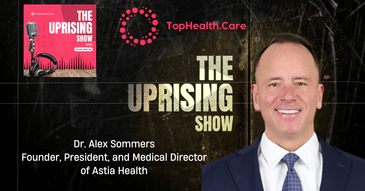
In this episode of The Uprising Show, we sit down with Dr. Alex Sommers, president of Astia Health and a former ER physician, for an unfiltered look at why the U.S. healthcare system is so complicated and who benefits from that complexity. Dr. Sommers shares his personal journey from feeling “complicit in the wrongdoing” inside hospital systems to building a new care model centered on advanced primary care, trust, and whole-person health.
We discuss the chronic disease crisis, why patients and employers lose faith in the system, and how misaligned incentives drive up costs without improving outcomes. Dr. Sommers reveals how his team is helping employers rethink benefits, move upstream to prevent disease, and invest in healthier workforces, not just lower costs. He challenges common solutions, names the most overhyped trends, and explains why real change starts with rebuilding relationships between patients and care teams. If you’re searching for new ways to cut through the noise and make healthcare work, this episode is for you.
Timestamps:
00:00 Deciding to leave healthcare industry
04:46 Moving to a Membership Model
06:49 Focus on prevention and lifestyle medicine
11:35 Optimism for future healthcare relationships
15:21 Addressing Chronic Disease in Healthcare
Insights on Transforming Healthcare: Lessons from Dr. Alex Sommers
In the recent episode featuring Dr. Alex Sommers, president of Astia Health and experienced ER physician, insightful commentary was offered on the current state of healthcare, the challenges facing both patients and employers, and the potential solutions that can lead to a healthier future. If you are keen to understand healthcare reform, primary care transformation, and the role of lifestyle medicine, this episode is packed with valuable takeaways.
The Complexity of Healthcare
Dr. Alex Sommers opened the discussion by acknowledging the complexity of healthcare in the United States. According to Dr. Alex Sommers, the intricacies sometimes seem intentional and often leave patients feeling like just another number in the system. Hospitals, he notes, are too often focused on top-line revenue instead of patient outcomes, which contributes to a broader sense of distrust among the public. As Dr. Alex Sommers stated, many patients do not want to seek healthcare services, they simply want to be healthy and able to manage daily expenses such as groceries, mortgages, and childcare without added medical burdens.
Shifting from Fee-For-Service to a Membership Model
Building Astia Health was a response to firsthand experiences with the failings of traditional hospital roles and the fee-for-service model. Over approximately 12 years, the organization shifted to an advanced direct primary care model, serving over 70 self-funded employers through brick-and-mortar clinics in Wisconsin and Missouri. While the journey started with a fee-for-service approach and technology-driven mobile services, it eventually landed on a membership model that focuses on building trusted relationships and dedicating time to care.
Why Employers Need Whole-Person Care
Employers are unique stakeholders since they purchase benefits for their workforce and their families. Dr. Alex Sommers points out that this role is often misunderstood, in part because many decisions are made without clinical input. The result is inefficient utilization and rising costs for preventable chronic diseases. By moving upstream and focusing on prevention, as well as embedding principles of lifestyle medicine such as nutrition, physical activity, restorative sleep, social connection, and reducing risky behaviors, Astia Health was able to reverse diabetes in patients within weeks, without relying on costly medications or interventions.
Unlocking Savings with Advanced Primary Care
One of the most significant insights from Dr. Alex Sommers was that the most underrated lever for cutting costs without cutting care is to invest in primary care and whole-person advanced primary care. Advanced primary care can contribute not only to costs savings but also to employee satisfaction and workplace performance. Investing in these models can help employers become leaders in retaining and nurturing healthy employees, giving them an edge in business competition.
Reframing the Healthcare Conversation for Employers
For decision-makers like CFOs and CEOs, Dr. Alex Sommers emphasized that understanding the direct return on investment for primary care and prevention may be challenging. However, the bigger picture includes higher employee performance, business growth, retention, and a culture of health within the organization. Changing the conversation from mere top-line or bottom-line revenue to an investment in people is key.
Remaining Optimistic about Healthcare
Despite the many challenges, Dr. Alex Sommers remains optimistic. He believes the return to relationship-centered medicine, made possible by independent practitioners and advanced primary care models, is a sign of positive evolution. It gives hope for a system where future generations of doctors can form meaningful connections with patients once again.
Conclusion
The insights shared by Dr. Alex Sommers in this episode shed light on the path forward for healthcare. By transitioning from a transactional, fee-for-service system to one built on trust, prevention, and true relationships, both patients and employers stand to benefit. Investing in advanced primary care and lifestyle medicine could be the change that transforms both health outcomes and cost structures in years to come.
The Uprising Show Website: https://theuprisingshow.com/
Vivek Nanda's LinkedIn: https://www.linkedin.com/in/viveknanda1/
Vivek Nanda's Twitter: https://x.com/vickks
TopHealth Media Website: https://tophealth.care/
“Disclaimer: Informational only. Not medical advice. Consult your doctor for guidance.”